Thursday, August 7, 2014

What It Takes

"I have no special talents. I am only passionately curious." -Albert Einstein
So much of the information available today on the idea of inspiration and inspiring people seems to center on the business world.  Much of it comes in the form of "How to be an Inspiring Leader" kind of stuff.  The problem with that, if there is indeed one, is that it assumes that there is some way to externally create inspiration.  If only someone follows this recipe - 5 steps, 7 steps., 10 steps - then one can become inspiring.  Its almost like saying one can become a successful business person by merely wearing the right clothing.

The trouble is, most of the truly inspiring people aren't individuals we would classify as "leaders", they tend to fall into categories such as teachers, parents, grandparents, close friends, etc.  The kind of inspiration that makes us better people, that influences our lives, doesn't come from the media anointed "celebrity" leaders of the culture, but from those with whom we interact routinely and admire for strength and courage.  

 There is a lot of information regarding inspiration out there, and much of it good, and even more of it ridiculous.  But with enough time and effort some themes seem to appear.  Here are some of the most common characteristics of inspiring people - not necessarily inspiring leaders -  presented in no particular order, since all are very important:

  1. Passion - this seems to be the most cited aspect of inspiring people, and it makes perfect sense.  How can one be inspiring if he or she is not inspired?  Nothing motivates others like the complete devotion to pursuing a goal, from running a giant software company to raising children, one has to be all in or it doesn't work:  It is the soul's duty to be loyal to its own desires. It must abandon itself to its master passion. - Rebecca West
  2. Positivity - A positive outlook on life will help alter the negative view of others.  No difficult task can be accomplished if one has doubts, or at least allows those doubts to overwhelm their outlook. We can't control all the events that occur in our lives, but inspiring people control their responses to those events - not the artificial "making lemonade" meme, but rather enduring the rain with good humor because they know there's a sunny day on the way.
  3. The ability to socially interact with others - This always seemed a difficult task for the introverted me.  But over time, I've gotten used to working with people in various settings.  I've found that being positive, polite but honest,  seems to work pretty well.  I've got a long way to go, but inspiring people seem to have the knack of authentically connecting with others.
  4. Empathy - Inspiring people have the ability to relate to others on a personal level - which goes with the last point.  The ability to listen to, and understand, others is essential in making an impact on the lives of other people.
  5. The strength of character to stay authentic and follow their own paths - Often the stories we most find inspiring is those of people who followed their own paths, sometimes against great odds and criticism, to reach their goals.  The thing many people forget is that the "triumph over adversity" often involves a tremendous amount of adversity lasting for years and years. The perseverance and will it takes to keep true to oneself in the darkest of times is what really inspires.  It is so much easier in life to blend in with the sheep instead of standing out like the tiger, to bend to the will of groupthink; but would William Blake write a poem like this to sheep?
Tyger Tyger, burning bright,
In the forests of the night;
What immortal hand or eye,
Could frame thy fearful symmetry?
In what distant deeps or skies.
Burnt the fire of thine eyes?
On what wings dare he aspire?
What the hand, dare seize the fire? 
And what shoulder, & what art,
Could twist the sinews of thy heart?
And when thy heart began to beat,
What dread hand? & what dread feet? 
What the hammer? what the chain,
In what furnace was thy brain?
What the anvil? what dread grasp,
Dare its deadly terrors clasp!

When the stars threw down their spears
And water'd heaven with their tears:
Did he smile his work to see?
Did he who made the Lamb make thee? 
Tyger Tyger burning bright,
In the forests of the night:
What immortal hand or eye,
Dare frame thy fearful symmetry?

Shakespeare's St. Crispin's Day speech from Henry V is often regarded as the template for inspiring talks - it has likely been adapted by almost every football coach in history at one point or another.  Here's Kenneth Branagh's Henry V trying to inspire his troops before facing the five-men-to-one odds at Agincourt.  Let's see how Shakespeare's Henry embodies the points above:


Finally - tying to be inspiring won't work.  Working to be your own unique person will itself inspire others:   
"Be yourself--not your idea of what you think somebody else's idea of yourself should be." --Henry David Thoreau


Monday, August 4, 2014

Logical Eye Candy

In 1880 a publication called Philosophical Magazine and Journal of Science published an article called On the Diagrammatic and Mechanical Representation of Propositions and Reasonings.
No one probably noticed at the time - it was a relatively obscure publication in a crowed field - but the boon for and bane of visual learners was given birth in that article.

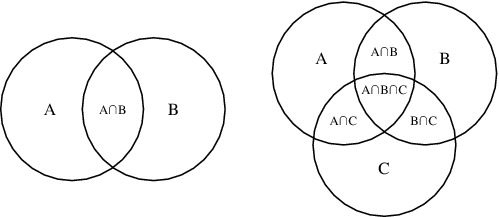
It was in that publication that John Venn, born this day 180 years ago, gave the world his famous diagram.  The diagram, usually shown as intersecting circles with data inside, is a way of visually organizing the logical relationship of those datum.  The unique thing is that over time the Venn diagram, originally contained within the mathematical fields, has spread to be one of the few tools to cross disciplines effectively.  We are all familiar with this sort of thing from our high school math days:

Circular logic!


In English, we inflict this sort of thing on our students:


It's supposed to make things clearer!


For visual learners struggling with the concepts involved with sometimes abstraction relationships between sets of data, the Venn diagram can help clarify things greatly.  Sometimes in a surprising way - from the factual to the fanciful:

Thrilling!


Clarity is a must at times like these!


And Venn has made his impact in popular culture with this touching and bittersweet diagram from John Green's bestseller The Fault in Our Stars:

Yes, you can start crying now.


As silly as some of these seem - they can begin the process of seeing relationships between diverse things.  Looking for similarities and where points diverge - building patterns - all made much clearer with circles and intersections.  So thanks, John Venn, for the diagram that launched a thousand homework assignments - and helping out visually oriented learners like me.  Google has also paid tribute to Venn, and I am happy to add my appreciation as well.  Happy Birthday, John!


Thursday, July 31, 2014

Dreams of Flight

Incarus in flight


Recently I've taken a few flying lessons, first to see see if it is something I would like to pursue (it is!) and to see the time and cost involved (substantial, unfortunately).  It will happen one day, but for now I just have to be satisfied with dreams of flight, as do most of us. Dreams about flying is one of the most common dreams humans have, and the reason is that flight symbolizes freedom.  As Eric Kraft writes in his witty, whimsical, and moving novel Flying:


I also had daydreams of flying, waking dreams, wishes and fantasies, but they were quite different from my sleeping dreams of flying.  My daydreams were about getting somewhere, or about getting away from where I was and flying to somewhere else.  They were about escape and exploration, and they were deliberate.  I launched my daydreams as I might have launched a flying machine.  I got into the dream and took off.  Often I launched one of these daydreams on a Sunday, when I was in the back seat of the family car, and my family was out for a Sunday drive.

(Note: this is a book worth reading even if you care nothing about flying)

Flying would also come up for my brother and I during our family drives through the country.  When we were little, less than eight years old certainly, we would excitingly squeal at the rare site of any type of aircraft we encountered, usually some beat-up farm plane or crop duster.  My mother years later would say she would have to work at distracting us during these trips or else we would howl ceaselessly and beg our father to pull over and let us ride in the plane as if every crop duster was just standing by for the right kids to come by before cranking the propeller into life.

My brother and I would still be here if we had seen this as kids!


My first flight came during some county fair when I was around eight years old when some local airborne entrepreneur was offering a quick trip around the airport for a penny a pound - which they estimated.  I actually saved up for the flight, which lasted all of five-seven minutes.  It was magical - so much so that it barely registered that the pilot seemed a little on the drunk side.  I can still feel the excitement as the plane taxied, the wheels left the ground, and we metaphorically gave Sir Isaac Newton and his so-called gravity the finger as we soared into the sky.

As I have learned recently, flying, even if contained in a metal tube with wings,  really is an intoxicating sense of freedom.  It often brings to mind the lines from Walt Whitman's Song of the Open Road:
From this hour I ordain myself loos’d of limits and imaginary lines,
Going where I list, my own master total and absolute,
Listening to others, considering well what they say,
Pausing, searching, receiving, contemplating,
Gently,but with undeniable will, divesting myself of the holds that would hold me.
I inhale great draughts of space,
The east and the west are mine, and the north and the south are mine.

Sometimes the Gulf of Mexico is in front of me, Key West is somewhere off my left wingtip, New York City is far beyond to the right.   A turn of the yoke and I could be in Atlanta in a few hours, to the left, and I could be sipping a margarita in the Keys by sunset.  No roads to constrain me, no sense of being pulled downward as long as the prop keeps turning, only open sky and my thoughts for company as the compass spins at my command.

That glorious sense of freedom, of unlimited possibilities, must have been what our friend Icarus felt when he and his dad Daedalus escaped jail on Crete and took to the air with their wings of wax.  Dad, of course, was prudent and stayed low.  Icarus, impetuous, doomed youth that he was, had to fly higher and higher, enjoying the sensation of being freed not only from King Minos' jail cell, but also from the invisible chains of gravity.  His joy lasted briefly, the sun being too warm for wax wings, but it was a joy that few have felt and one well captured by Anne Sexton:

To A Friend Whose Work Has Come To Triumph
Consider Icarus, pasting those sticky wings on,
testing that strange little tug at his shoulder blade,
and think of that first flawless moment over the lawn
of the labyrinth. Think of the difference it made!
There below are the trees, as awkward as camels;
and here are the shocked starlings pumping past
and think of innocent Icarus who is doing quite well:
larger than a sail, over the fog and the blast
of the plushy ocean, he goes. Admire his wings!
Feel the fire at his neck and see how casually
he glances up and is caught, wondrously tunneling
into that hot eye. Who cares that feel back to the sea?
See him acclaiming the sun and come plunging down
while his sensible daddy goes straight into town.

We all dream of flying from time to time, because we all dream of and savor the feeling of freedom.  Not everyone finds freedom in actual flight - there are many paths to that goal.  But I wager the exhilaration of breaking free of those invisible chains holding us back is the same for everyone.  Ultimately, the fall to the sea awaits us all, so like Icarus, we need to set our sights high and seek out the sun while we may.  Fly on, fly on!

Wednesday, July 30, 2014

Beautiful Places - Underwater Ruins

The ever-cheerful Plato offers up this account of the end of the lost continent of Atlantis, which had just lost a war with the intent of extending its empire:

But afterwards there occurred violent earthquakes and floods; and in a single day and night of misfortune all your warlike men in a body sank into the earth, and the island of Atlantis in like manner disappeared in the depths of the sea. For which reason the sea in those parts is impassable and impenetrable, because there is a shoal of mud in the way; and this was caused by the subsidence of the island.

Parable or history?  Most serious scholars think the former, but there is not enough evidence to completely dismiss the latter.  Many people over centuries have searched for the sunken land and its fabled city, and no end of legends have sprung up around it.  But while Atlantis, if it existed at all, remains hidden from view, many other underwater ruins and shipwrecks are well known, and offer up beautiful images to the eye:


Some the architecture that gives the city its name


According to the U.K. 's Daily Mail, Shi Cheng was known as the Lion City until 1959 when the Chinese government decided this area was a perfect spot for a hydroelectric plant, which needed a man-made lake to support it.  Now Lake Qiandao surrounds it, and divers need to go 131 feet down to see the preserved architecture:

Quiet and beautiful


Pavlopetri in Greece
Heracleion, Cleopatra's recently discovered port city in the Mediterranean 


A nice list a summary can be found here. These underwater ruins have an almost magnetic attraction because of what they were, are, and say about humans and our march through time.  Constructed to be testaments to human power, ingenuity, and dominance over the natural world, these ruins once sat on solid ground for all to see and ponder.  Now, through fortune or design, these terrestrial spaces and now transported to an alien world.  Here, we see something familiar but in an altogether unfamiliar context.  There's a solitude now to these constructions that once teemed with human activity.  Quiet, remote, strange-yet-familiar, these ruins remind us that the plans and designs we make in this world are really only for the moment - thoughts of longevity are nothing more than beautiful daydreams concocted on a summer's afternoon.  


Tuesday, July 22, 2014

Besieged!

Warning, there are plenty of spoilers ahead!

I began reading Jerusalem, a biography by Simon Sebag Montefiore a short while ago and was taken aback by the detailed account, coming from Jewish historian Josephus, who witnessed the event, of the siege and fall of Jerusalem to the Romans in 70 A.D.  Josephus recounts the horror in vivid detail, including this part that comes after several skirmishes causes the Jewish defenders to fall back into a second walled area of the city:
THUS the fight continued for three days, till Titus a second time entered the wall. He threw down all the northern part and strongly garrisoned the towers of the south. The strong heights of Sion, the citadel of the Antonia, and the fortified Temple still held out. Titus, eager to save so magnificent a place, resolved to refrain for a few days from the attack, in order that the minds of the besieged might be affected by their woes, and that the slow results of famine might operate. He reviewed his army in full armour, and they received their pay in view of the city, the battlements being thronged by spectators during this splendid defiling, who looked on in terror and dismay. 
The famine increased, and the misery of the weaker was aggravated by seeing the stronger obtaining food. All natural affection was extinguished, husbands and wives, parents and children snatching the last morsel from each other. Many wretched men were caught by the Romans prowling in the ravines by night to pick up food and these were scourged, tortured and crucified. This was done to terrify the rest, and it went on till there was not wood enough for crosses. 
Terrible crimes were committed in the city. The aged high-priest, Matthias, was accused of holding communication with the enemy. Three of his sons were killed in his presence, and he was executed in sight of the Romans, together with sixteen other members of the sanhedrin. The famine grew so woeful that a woman devoured the body of her own child. 
From Wikipedia - Destruction of the Temple of Jerusalem,Francesco Hayez, oil on canvas, 1867. Depicting the destruction and looting of the Second Temple by the Roman army.

What happened in Jerusalem is not unusual in sieges.  The siege became a tried and true tactic of warfare for centuries because it worked on so many levels.  First, the besieging army, if lucky, would arrive at a cities gates with little notice and less time for preparation by the luckless inhabits.  Encircling the city, the army on the outside would cut off all egress and communication coming in and out of the settlement.  Then, depending on the temperament of the commander and his orders, the invaders would either demand immediate surrender, and if that failed or the army was feeling particularly hostile, a long period of waiting would ensure.

Think of the psychological toll, as Josephus alludes to, that such a tactic takes on the those trapped within walls, which had once seemed a strong and comforting embrace, but that would now, with each passing day, come to resemble a tomb.  The inhabitants would daily watch the construction of enormous siege engines being built, and/or the slow, elaborate digging of tunnels to allow attackers to approach the walls unmolested by the defenders arrows, and in later centuries, bullets.  The residents of the hapless town would also be aware of the dwindling food stores, and many would resort to desecrations such as those Josephus describes.  As the character Roberto della Griva in Umberto Eco's novel, The Island of the Day Before, puts it:

We must keep them within range on the
plain, in order to harass them and impede the
construction of the tunnels. In short, there will be glory
for all. Now let us go to supper. The siege has only
begun and provisions are still plentiful. It will be awhile
before we start eating the rats.

There are only three ways to end a siege: repulse the invaders, surrender, or receive outside help.  Somehow overcoming the opposing force is extremely unlikely, since simple patience will eventually break the will of the besieged defenders.  Otherwise - SPOILER - The latter looked like this as Gandalf led the charge to break the siege of  Helm's Deep in The Two Towers:


If outside help is not a possibility, defense or surrender are the only options, for when the siege ends and the attack aimed at breaching the defense begins, things only get worse.  Shakespeare's Henry V, in the form of Kenneth Braungh, gives the citizens of Harfleur a warning of what is to come:


Traditionally, the invaders, once through the walls and into the city, were given free reign to do as they pleased.  What pleased them, after weeks, months, even years of siege (ten years in the case of Troy, according to the Iliad) is a complete catalog of horror. The cathartic release of pent up fear and hostility generally resulted in stealing everything of even negligible value - a given.  Raping women, children, and even men was an expected occurrence , followed by the brutal murder of the victims, or their sale into slavery, as Hecuba states in Euripides' play The Trojan Women:


Ah, woe is me! This surely is the last, the utmost limit this, of all my sorrows; forth from my land I go; my city is ablaze with flame. Yet, thou aged foot, make one painful struggle to hasten, that I may say a farewell to this wretched town. O Troy, that erst hadst such a grand career amongst barbarian towns, soon wilt thou be reft of that splendid name. Lo! they are burning thee, and leading us e'en now from our land to slavery. Great gods! Yet why call on the gods? They did not hearken e'en aforetime to our call. Come, let us rush into the flames, for to die with my country in its blazing ruin were a noble death for me.
Katherine Hepburn and Vanessa Redgrave starred in an excellent 1971 film of the play.

As King Henry said, there was no way to control the rampage, even if any commander were so inclined. Then, if the attackers weren't planning to use the town as residence or dwelling, but rather planned to move on to the next unfortunate settlement, then the homes and buildings were set on fire.

Surrender, until more recent times, was not much better.  All of the above was still possible - there were few guarantees of safety, and those often empty words.  Occasionally, the victorious force would show mercy, such as Saladin's treatment of the surrendering force in Jerusalem - one of the more historically-accurate parts of the film The Kingdom of Heaven:


Usually, all of the available choices were terrible, and remain so to this day. Times have changed, bullets have taken the place of arrows, and rockets that of trebuchets.  Recent events in Syria and the Ukraine, Israel and Palestine show sieges still occur, and human cruelty is still loose in the world.  Methods have changed over time, but until the human heart changes, the innocent will continue to suffer, for once some modern version of  horsemen and flags appear on the horizon, disaster surely follows.

Sunday, July 20, 2014

Beautiful Places - Abandoned Amusement Parks


Originally, I was going to write about the beauty of train stations, such as this:

The Antwerp Train Station would rival the palaces of emperors and kings of any era.  


But, there is so many other places to see this splendor, and it so obviously beautiful, that it would be merely adding one more grain of sand to an entire beach of admiration.  Instead, let's consider the beauty of this:
Six Flags Louisiana - via the Los Angeles Times


At first there may be little that we would call beauty in this and the other images to come.  Most of the time, decaying wood, peeling paint, and rusting steel aren't the ingredients that make up a conventional formula for beauty.  There are probably several reasons for this - culture, a psychological preference for order over chaos, and no one like to be reminded of eventual decline and "death". But this precisely, in part, what makes these places beautiful.  Another beautiful thing about these forlorn parks is not so much what they have become, but what they represent.


Some dreams last longer than others


These parks were once the destinations of dreams.  Families planned to make a journey to these locations in hopes of bringing joy to their children and creating a bond over  a memory of a shared happy experience, far from the reality of work and stress.  Young couples would take those first steps toward intimacy with a kiss on the Ferris wheel, high in the clouds and beyond the view of disapproving eyes.


Spinning no more


Bright lights, music, energetic, smiling people, young and old alike full of energy in this world set apart from reality.  Now all gone.  Why? various reasons, the same for anything that is abandoned by humans.  A lack of money, a lack of interest, something new and "better" comes along, natural and unnatural disasters - a complicated mixture.  That is what happens when outside reality invades the worlds we create for ourselves, and not everything and everyone adapts to this invasion.  Time passes, paint fades, metal rusts - but these ghosts remain, witnesses and repositories of dreams and desires for fleeting moments of joy and human connection.  These images brought to mind passages from Oliver Goldsmith's The Deserted Village:


Six Flags near New Orleans


How often have I blest the coming day,
When toil remitting lent its turn to play,
And all the village train, from labour free,
Led up their sports beneath the spreading tree,


At the Williams Park Amusement Park


While many a pastime circled in the shade,
The young contending as the old surveyed;
And many a gambol frolicked o'er the ground,


And slights of art and feats of strength went round;
And still as each repeated pleasure tired,
Succeeding sports the mirthful band inspired;
The dancing pair that simply sought renown
By holding out to tire each other down;


From this Hungarian web site


These were thy charms, sweet village; sports like these,
With sweet succession, taught even toil to please;
These round thy bowers their chearful influence shed,
These were thy charms—But all these charms are fled.


It would be easy, not to mention ironic, to sit at the bar of some sort of O'Toole's Irish Pub and decry the artificiality of these places, and how the world is better now that they are being returned to a forest full of invasive species.  The truth is, most, if not all, of our reality is our construction, and all of our reactions to those realities are unquestionably our invention.  Some see greed, some see an opportunity for fun - but for these places, the debates are moot.  Now the only visitors are the lonely wind that stirs the grass growing in the sidewalk, and the dead leaves skating across empty plazas.  Is that really the dim echo of laughter, muted squeals of  excited children, and music, swirling in that same lonely wind?  Perhaps, to the more romantic-minded among us who find such places beautiful - just perhaps...

Thursday, July 17, 2014

Designs for Learning - Part 2 - More Than Round Tables in Square Rooms

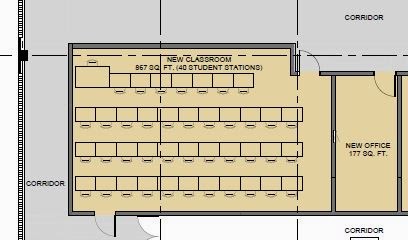
At the campus of the college that employs me, we are now in the process of updating some of our classrooms and learning spaces.  It's pretty exciting to stand back, do some research, and actually think and plan how we are going to utilize these spaces to enhance student learning.  The architect's plans show rooms stripped to the bare walls, and some of those walls moved to subdivide underused areas into larger rooms.  All though in our discussions we are all agreed on the need to make these rooms different from the traditional classrooms.  However, when the drawings arrived, they showed rows of tables and chairs in straight lines, all facing front:

Not cool!


Fingers to the phone, and while dialing, some the opening lines of Madeline, which I used to read to my daughter, shot through my mind:

In two straight lines they broke their bread,
and brushed their teeth,
and went to bed...

Connection - "Hey, about those plans..."
Sigh - "Yes, Ronin, I know.  It's the only template we have to show classrooms in our drawings..."

Seems like whatever software the architects use for making classroom drawings  needs a new template - but they are hardly alone.  Many educators and administrators need new mental templates when thinking about how learning occurs in the new millennium, and how the spaces where that learning takes place need to be arranged.

New (relatively speaking) pedagogies like collaborative learning and peer learning have emerged from years of research and pilot programs, and new methods, such as the flipped classroom method, have also begun to take hold - to say nothing of new teaching technologies and findings in allied areas such as cognitive science and psychology.  To take advantage of the proven benefits of incorporating these new ideas and methods into a learning experience, rooms and buildings also need to be updated.  And to be fair to all involved, it is not an easy process, and one fraught with potential for errors and wasteful spending.  By the time all the approvals are secured, funding is in place, designs drafted and furniture is ordered, what was cutting edge 12-24 months ago is now dated, and on its way to becoming abandoned and obsolete.  It's a bit like painting the Golden Gate Bridge...

Maybe if Kim Novak would stop being so beautiful we could see the bridge better!


...Once you've completely finished, its time to go back to the start and begin painting again - a never ending process.

Luckily, there are now many organizations and companies who are busy planning for now, and what is likely to be useful in the future.  One is SCALE-UP (Student Centered Active Learning Environment with Upside-down Pedagogies) at the North Carolina State University, which has expanded its ideas to other colleges and universities:


The SCALE-UP ideas sync with those of many groups, companies and organizations working on aligning learning ideas and methods with architecture and interior school design.  The JISC Development Group, under the direction of the Higher Education Funding Council for England (HEFCE), put together  an informative brochure that gives an overview of these ideas - essentially, how to create a modern learning environment that transcends the traditional ideas of what constitutes a classroom space:

An educational building is an expensive long-term resource. The design of its individual spaces needs to be: 
  • Flexible – to accommodate both current and evolving pedagogies 
  • Future-proofed – to enable space to be re-allocated 
  • and reconfigured 
  • Bold – to look beyond tried and tested technologies and pedagogies 
  • Creative – to energise and inspire learners and tutors 
  • Supportive – to develop the potential of all learners 
  • Enterprising – to make each space capable of supporting 
  • different purposes 
A learning space should be able to motivate learners and promote learning as an activity, support collaborative as well as formal practice, provide a personalised and inclusive environment, and be flexible in the face of changing needs. 
The JISC document is incredibly rich in detail and deserves to be read in full - I have already done so several times and find something new every time.  Other research as well is pointing to the same considerations.

So, we have a lot to consider as we move forward, especially as we try our best to be good stewards of the public tax money entrusted to our care.  As stated in yesterday's post, its a tricky balancing act between politics, pedagogy (and andragogy), economics, and architecture.  One thing is certain, designing the active learning experience that generates knowledge students will retain and use beyond their days of institutional learning involves more than putting up whiteboards and round tables in square rooms. But the benefits to students can't be ignored or dismissed, so onward we go - I can barely wait to see what happens next!